No mouse will turn a 7 CPS clicker into a 15 CPS clicker by itself. But the right mouse removes obstacles: it fits your hand, lets the finger rest naturally on the button and registers fast clicks reliably. This guide covers what matters, roughly in order of importance.
Fit comes first
A mouse that fits your hand lets you hold it lightly, and a light grip is the foundation of fast, comfortable clicking. Measure your hand from the wrist crease to the tip of the middle finger. Many manufacturers publish recommended hand sizes, and reviews often describe how a shape suits different grips. Our guide to grip styles explains palm, claw and fingertip grips.
| Hand length | Typical fit |
|---|---|
| Under 17 cm | Small or medium mice |
| 17 to 19 cm | Medium mice suit most grips |
| Over 19 cm | Medium or large mice, especially for palm grip |
Weight
Lighter mice are easier to move quickly and tire the hand less over long sessions. They are also easier to nudge by accident when you jitter or butterfly click. Heavier mice stay put but take more effort to move. Many fast clickers settle somewhere in the middle, between about 60 and 90 grams.
Buttons and switches
Look at the left button. A wide, flat button leaves room for two fingers if you want to try butterfly clicking. A button with a slight dip guides one finger to the same spot every time. The switch underneath sets the feel: lighter switches suit fast clicking, heavier ones reduce accidental clicks. Optical switches avoid contact bounce and the double-click problems that come with worn mechanical switches. See mouse switches explained for details.
Settings worth having
Companion software varies a lot. Features that help fast clickers include adjustable debounce, a choice of polling rates, and the ability to save settings on the mouse itself so they work on any computer without the software installed.
Mouse features for fast clicking
- Shape that fits your hand and grip
- Weight you can control comfortably
- Crisp, light primary switches
- Adjustable debounce or optical switches
- Settings saved on the mouse
Wired or wireless
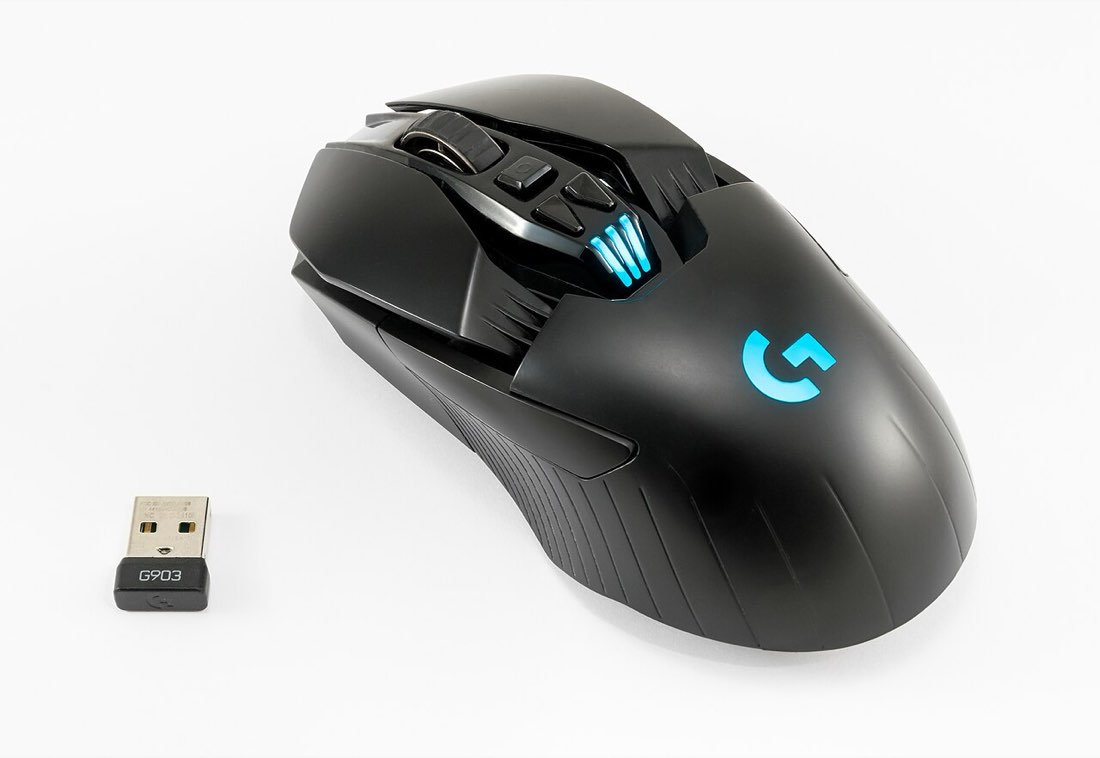
Modern wireless gaming mice with their own receiver perform as well as wired ones for clicking and responsiveness. Bluetooth is fine for office use but less consistent for games. Wired mice never need charging, and their cable can add a little drag. Either choice is fine for click tests.
Things that matter less than marketing suggests
Very high sensor resolution and extreme polling rates make little difference to click speed. RGB lighting adds weight and nothing else. A mouse that is comfortable for hours matters far more than headline numbers. Our guide to polling rate explains why higher rates have diminishing returns.
Trying before you buy
If you can, hold a mouse in a shop before buying. Many retailers also offer returns within a set period. When a new mouse arrives, use the click tests to check it behaves properly; our guide to testing a new mouse has a simple checklist.
Choosing in five steps
- Measure your hand
- Decide your grip
- Shortlist shapes that fit
- Compare switch type and weight
- Test it when it arrives
Left-handed and ambidextrous mice
Most shaped gaming mice are designed for the right hand. Left-handed users can choose a symmetrical mouse and swap the buttons in system settings, or look for the smaller range of left-handed models. Symmetrical mice also suit people who switch hands to rest one arm.
Check where the side buttons sit. On many symmetrical mice they appear on both sides, and some can be disabled so the hand does not press them by accident.
Budget and durability
A mid-range mouse often has the same sensor and similar switches as a premium model, with fewer extras. Spending more tends to buy lighter construction, wireless performance and software features. If you practise click techniques heavily, durability matters: check reviews for comments on double clicking after months of use, and favour models with optical switches or replaceable switches.
A comfortable, reliable mouse that lasts several years is better value than a cheaper one replaced every few months.